MISSION 03 / CLOSETS
The chair is not a wardrobe.
A home for clothes that are neither clean-clean nor laundry-ready.
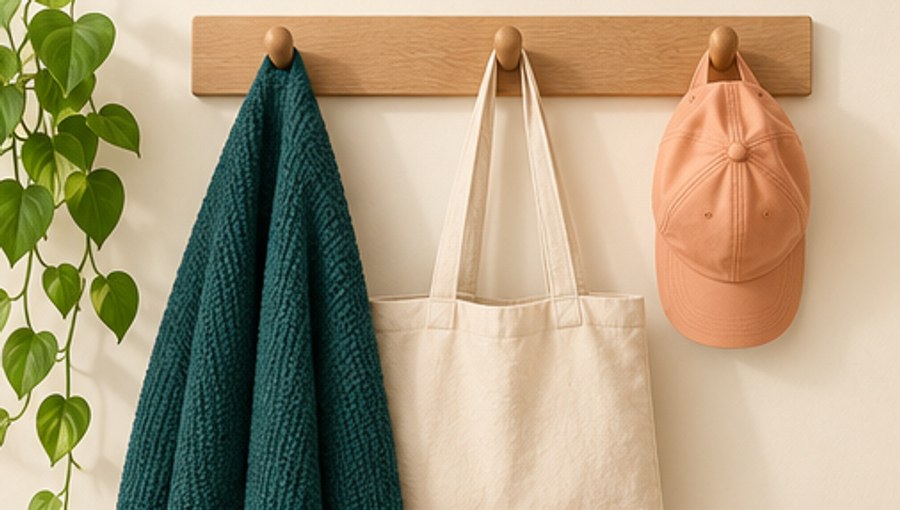
Choose one spot.
A few hooks, a shelf, or a short rail.
Set a limit.
Rewear clothes get a boundary, not a second wardrobe.
Review on laundry day.
Wear, return, or wash what is still here.
The full mission briefing
01 Your mission
Create a limited landing place for clothes you intend to wear again. The chair pile often exists because the usual choices—closet or hamper—do not match the way you actually use clothing. Add a third destination instead of demanding a different personality.
02 Choose a realistic destination
Use a few existing hooks, one shelf, or a short section of a hanging rail. Keep it separate from freshly washed clothes and from laundry. Choose a spot with airflow and follow garment care instructions. Damp, visibly dirty, or odorous clothing belongs in the appropriate cleaning routine rather than a rewear zone.
03 Limit the category
Decide what qualifies: perhaps yesterday’s jeans and a cardigan, rather than a week’s entire wardrobe. A small physical boundary is easier to maintain than a vague promise to keep the pile small. If the area is full, decide what to wear, return, or wash before adding more.
04 Make putting away easier
If folding is the obstacle, use hanging space where suitable. If hangers are the obstacle, use a shelf for garments that tolerate it. Do not put the landing spot far from where you get dressed. The system should take fewer steps than throwing something onto the chair.
05 Choose hardware carefully
Check a door’s clearance before adding an over-door rack. Follow the manufacturer’s weight limits and installation directions. Confirm your rental agreement before drilling. Adhesive hooks are not interchangeable with structural storage; check the specific surface requirements and load rating.
06 Stopping point
The chair is usable and rewear items have one visible destination. On laundry day, review the rewear zone too. No elaborate color scheme is required; the garment already knows which cardigan it is.
Options that earn their space.
Try what you own first. These are specification-based options, not personally tested products. Each Amazon link below is a paid link.
LYNK nine-hook over-door rack
A defined rewear zone without using floor space. Reserve a few hooks for clothes you will wear again instead of giving every hook a permanent backlog.
Measure door thickness and top clearance, and check the full door swing. Follow the supplied loading instructions; a reliable load limit was not established in our source check, so we do not quote one.
the door is too thick, cannot close freely, or you cannot confirm its safe load. Padding is not a guarantee against finish damage.
Sakugi rolling clothes rack
An alternative when a door rack will not fit and you have a dedicated floor area for rewear clothes.
Mark the footprint on the floor and allow extra room for hanging garments. Assemble and load it according to its instructions, distribute weight evenly, and check caster controls before use.
the footprint blocks a walkway or you only need two hooks. Adding a second wardrobe can turn a small rewear zone into overflow storage.
Specifications and limitations
OPTION TO COMPARE / NOT PERSONALLY TESTED
LYNK nine-hook over-door rack
The Bronze nine-hook listing specifies residential doors up to 1-7/16 inches thick. The hooks are arranged on two tiers and the listing describes foam padding.
Where it helps: A defined rewear zone without using floor space. Reserve a few hooks for clothes you will wear again instead of giving every hook a permanent backlog.
Check first: Measure door thickness and top clearance, and check the full door swing. Follow the supplied loading instructions; a reliable load limit was not established in our source check, so we do not quote one.
When to skip it: Skip it if the door is too thick, cannot close freely, or you cannot confirm its safe load. Padding is not a guarantee against finish damage.
Paid link: we may earn a commission on qualifying purchases. As an Amazon Associate I earn from qualifying purchases.
View LYNK nine-hook over-door rack on Amazon (paid link) ↗OPTION TO COMPARE / NOT PERSONALLY TESTED
Sakugi rolling clothes rack
The linked Black rack lists dimensions of 28 × 16.9 × 59 inches, a mesh shelf, and casters. The listing states a maximum load of 82 pounds; we have not verified that rating through testing.
Where it helps: An alternative when a door rack will not fit and you have a dedicated floor area for rewear clothes.
Check first: Mark the footprint on the floor and allow extra room for hanging garments. Assemble and load it according to its instructions, distribute weight evenly, and check caster controls before use.
When to skip it: Skip it if the footprint blocks a walkway or you only need two hooks. Adding a second wardrobe can turn a small rewear zone into overflow storage.
Paid link: we may earn a commission on qualifying purchases. As an Amazon Associate I earn from qualifying purchases.
View Sakugi rolling clothes rack on Amazon (paid link) ↗Measure before buying and make room for normal use.
Try the storage fit check →An entryway with an exit strategy. →