KIDS’ ROOM / FOR PARENTS & CAREGIVERS
Tiny people.
Spectacular mess.
Give the toys a home kids can actually use.
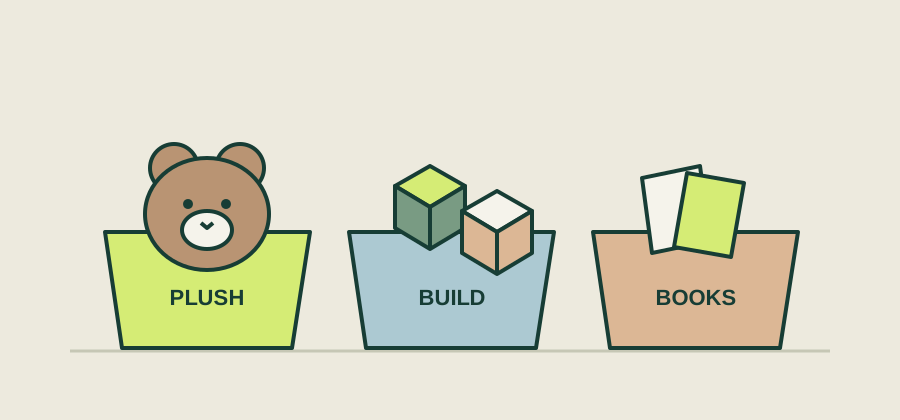
Pick broad homes.
Plush, building toys, books. No 47-part filing system.
Make cleanup reachable.
Everyday toys get an easy return spot. Adults handle setup.
Use a short reset.
Return one category together. A clear walking route counts.
Choose a home for the toy pile.
Woodure stuffed-animal organizer
Vertical storage for plush toys when an open basket is no longer enough.
Check the fit: The linked Natural listing gives 15.7 × 15.7 × 53.5 inches. Allow room to retrieve toys and follow all setup and securing instructions.
Explore on Amazon (paid link) ↗Fit notes & reasons to skip
This is a tall organizer, rather than a small lidded toy bin. Confirm the current variant, age guidance, assembly, and anchoring requirements. We have not tested stability, durability, or usable capacity.
Skip it if it encourages climbing, obstructs the room, or cannot be installed as instructed. A low open basket may be easier for a younger child. No product-photo permission is currently recorded.
Link and listing information checked October 20, 2026. Confirm current specifications before ordering.
TOOLF colorful 12-drawer storage cabinet
Separate drawers for smaller toy and craft categories.
Check first: Measure the full footprint, drawer-opening space, and actual toy sizes. An adult should assemble and secure it as instructed; confirm age guidance and loading limits.
Explore on Amazon (paid link) ↗Fit notes & reasons to skip
The linked Multicolored cabinet has a wooden top and plastic bins. The listing describes six shallow and six deep drawers. Stated outside dimensions vary slightly by section: approximately 46 inches wide, 13 inches deep, and 20.6 inches high. Confirm the selected version and usable drawer dimensions.
Skip it if toys do not fit the drawers, the cabinet blocks a route, or it invites climbing or cannot be secured as directed. Keep small parts inaccessible to younger children. We have not tested stability or drawer durability.
Link and listing information checked October 20, 2026. Not personally tested.
The full mission briefing
Choose one play zone
Start with one shelf or patch of floor, not the entire bedroom. Ask which toys are used here most often. Let the child help choose useful categories without asking them to make every decision in one sitting.
Keep categories obvious
Use names a child recognizes: animals, blocks, dress-up, books. A picture label can help before reading is comfortable. Keep sets together when their pieces are needed to play, and separate small parts from younger children.
Test the return trip
Watch how toys go back. If cleanup requires removing a heavy lid, balancing a stack, or reaching overhead, try a simpler spot. Adults should check the storage product’s intended use and keep furniture secured as directed. Storage is not climbing equipment.
Give plush toys a limit
Try an existing open basket first. Keep a few favorites accessible and review the rest together when storage becomes difficult to use. A tall holder may suit a particular room, but a larger capacity does not automatically make cleanup easier.
Reset together
Choose a predictable moment and return one category at a time. Make the task concrete: “animals in their home” beats “clean your room.” Keep exits, doors, and walking routes clear.
Call usable a win
The goal is a room where a child can find a toy, play, and help put it away. Matching containers and perfectly arranged shelves are optional. If a category keeps overflowing, adjust the amount or location before ordering another organizer.